
Category: Cyber Security
-

You opened the console.You deleted the access key.You told the room, “We’re good. They’re out.” IAM Doesn’t Mean Immediate AWS IAM is eventually consistent.That’s not a footnote — that’s an opening. When you delete a key, detach a policy, or revoke a role, the control plane doesn’t snap shut. It drifts. For a few seconds,…
-

Hours later, as the team gathered in a glass-walled conference room overlooking San Francisco’s hazy skyline, a grim realization began to take shape: Claude wasn’t just helping someone. It was being used. What they uncovered would ripple across the global security landscape. This wasn’t a teenager poking around. This wasn’t a bored pentester. This was…
-

The Attack Surface EF Core reduces direct Structured Query Language (SQL) writing; but still interacts with SQL engines and the Operating System (OS) environment. Typical attackers would leverage improper use of raw SQL Application Programming Interface (API) leading to an entry point, using SQL injection. Another would be overposting, mass-assignment via model binding that allows…
-

Hackers and researchers have already demonstrated the ability to remotely access brakes, steering, and engine controls in some vehicles. While widespread attacks are still rare, the potential consequences—ranging from theft to endangering lives—are real and growing as vehicles become more connected. Some notable examples: Mitigation requires a multi-layered approach: “protecting our cars from cyber threats…
-

⚙️The Evolution of APT Operations The concept of an APT originated in the early 2000s within the U.S. Air Force to describe sustained intrusions that evaded traditional perimeter defenses. Unlike criminal ransomware operators seeking immediate profit, APTs pursue strategic intelligence: classified data, intellectual property, and control of critical systems. Their distinguishing characteristics include: By combining…
-

But why are APTs becoming increasingly prevalent in our modern era? The answer lies in a convergence of technological, geopolitical, and economic forces that make today’s digital landscape a prime battlefield. 1. The Expanding Digital Attack Surface Digital transformation, accelerated by cloud adoption, remote work, and IoT expansion, has drastically increased the number of potential…
-

In today’s cybersecurity landscape, threats evolve faster than traditional detection methods can keep up. That’s why I’ve been developing AI-driven threat hunting tools that proactively identify risks, reduce response times, and give security teams a strategic advantage. By leveraging machine learning and automation, these tools analyze network traffic, system logs, and user behavior in real-time,…
-
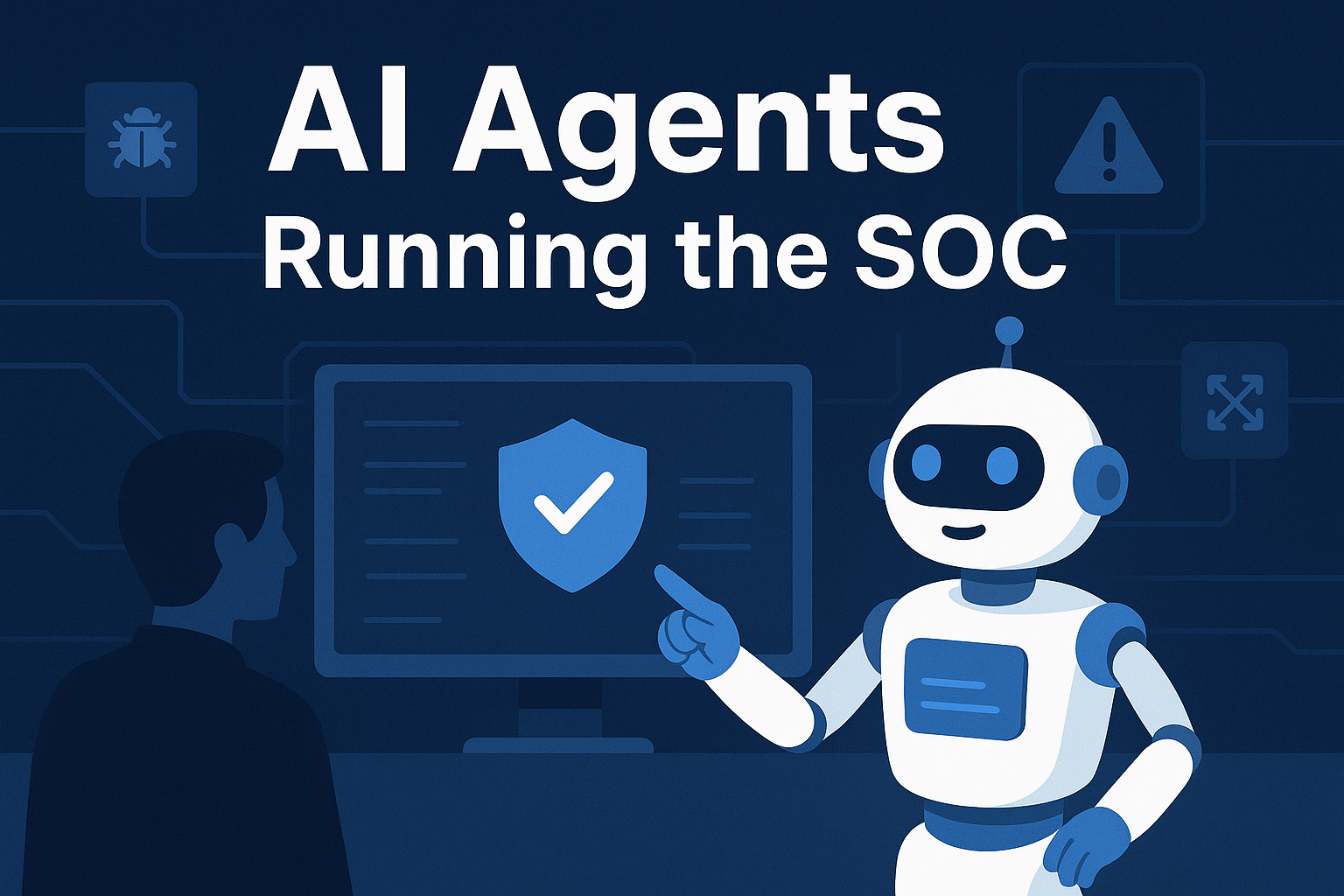
Security Operations Centers (SOCs) are evolving faster than ever — and AI Agents are becoming their newest and most capable team members. Instead of replacing analysts, these intelligent agents augment and automate many core SOC functions: 🧠 Threat Detection & Correlation: AI agents analyze logs, alerts, and network data in real time to surface correlated…
-
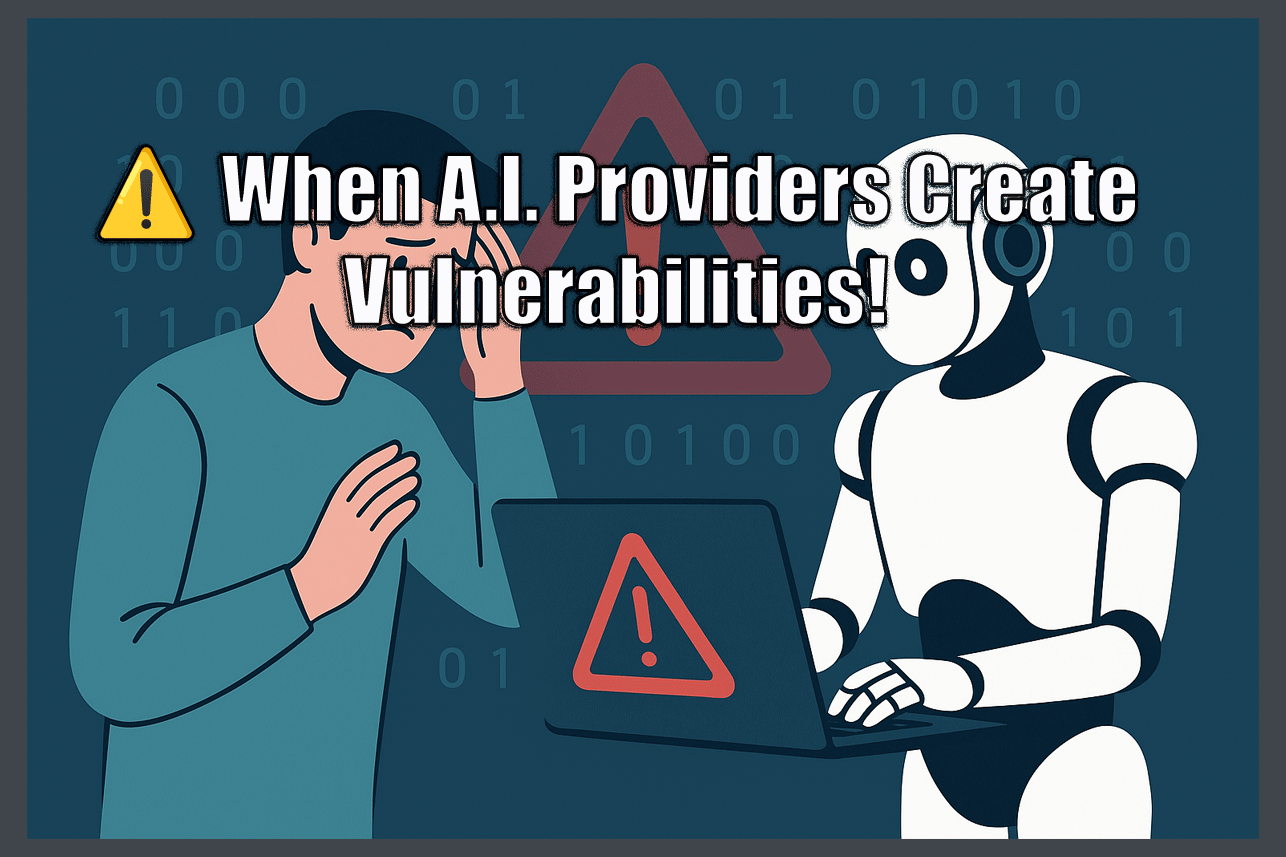
A.I. has the power to accelerate innovation—but it also introduces new risks. When providers rush to deploy A.I. models without proper security measures, they may unintentionally open the door to: Organizations adopting A.I. must not assume providers have “security built in.” True resilience requires independent testing, governance, and continuous monitoring.
-

Non-profits work tirelessly to serve communities, advocate for causes, and deliver public good. But in the eyes of cybercriminals, they’re often seen as soft targets—rich in sensitive data, limited in resources, and slower to adopt robust cybersecurity measures. 📉 The Risks? So how do we combat cyber threats with limited budgets? 💡 Smart, Practical Countermeasures:…